
School Nurse Medication Authorization Email
Many U.S. schools will not give your child any medicine, even a common one, until the parent and the doctor have both signed a form. A short school nurse medication authorization email gets you the right form and starts the process early. Below are 4 free templates and a simple step-by-step path, based on how many district and state forms work.
In an emergency, call 911. If your child has trouble breathing or a severe allergic reaction, do not wait for an email reply. Email is for planning ahead, not for emergencies.
The situation: Maya is 9 and has asthma. Her family just moved, and she starts at a new school on Monday. Her doctor wants her rescue inhaler available at school. The inhaler is a prescription and the pharmacy box has her name on it. The family has no school form. The front office only says, “Please see the nurse.”
What should her parent do? Not just hand the inhaler to Maya. Many schools do not give medicine that a student brings in alone, and most want signed forms first.
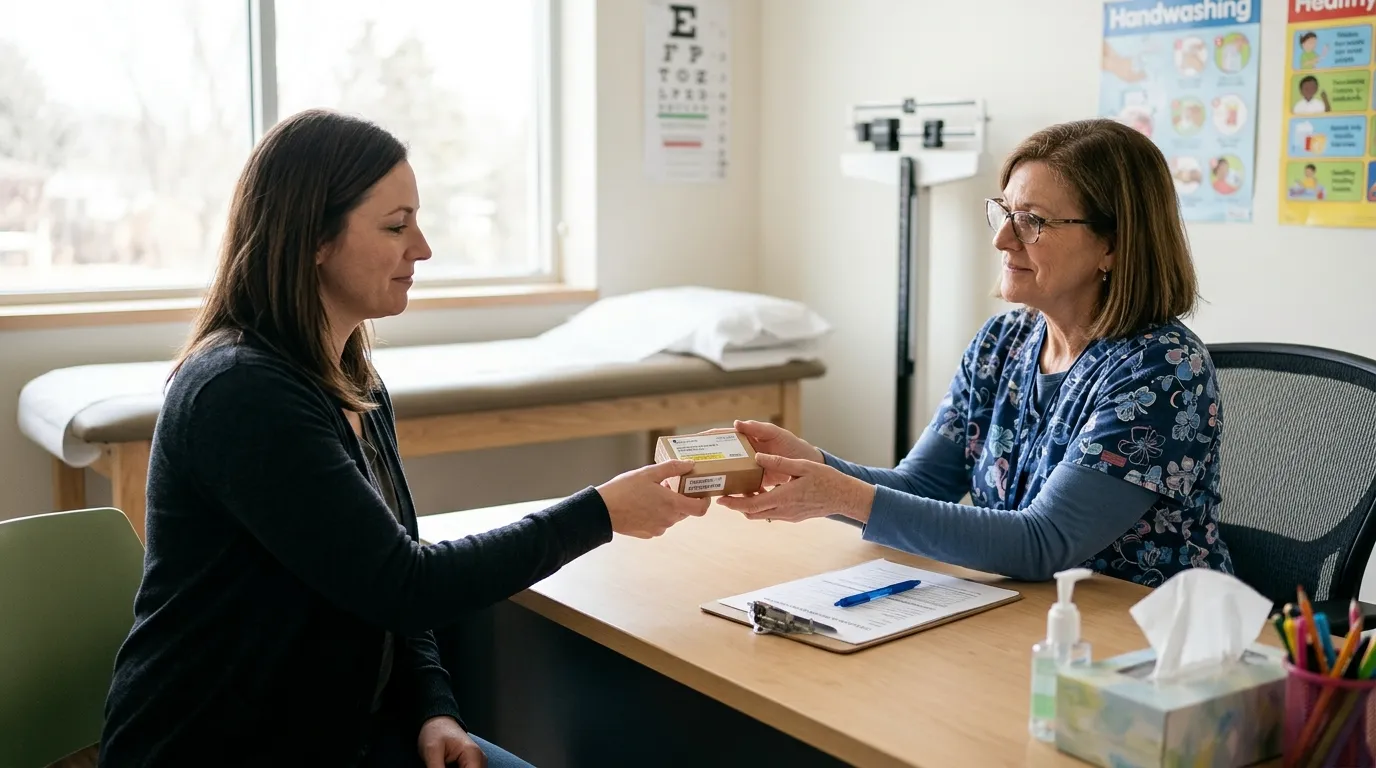
The path that fits: (1) Email the nurse today and ask for the district form and policy. (2) Take the form to the doctor to fill in and sign. (3) Bring the inhaler in its original pharmacy box and sign it in with the nurse. (4) Ask whether Maya may carry it herself, since that often needs extra approval. This order matters because the school usually needs the signed form and the labeled container before it will give any medicine.
What Schools Usually Ask For
Rules are set by each state and district. But the same points appear on many school medication forms. Use this table as a checklist, then confirm with your school nurse.
| Type of Medicine | What Many Schools Ask For | Ask the Nurse |
|---|---|---|
| Prescription medicine | Parent’s written permission, the doctor’s order and signature, and the pharmacy-labeled original container. The label must not be expired. | “Which form do you use, and can the doctor fax or email it?” |
| Over-the-counter medicine (pain, allergy) | New or sealed container with the label. Some schools also want a doctor’s note, or only allow a few days without one. | “How many days can you give it without a doctor’s note?” |
| Emergency medicine (inhaler, epinephrine auto-injector) | The same forms, plus an action plan from the doctor. Carrying it yourself often needs approval from the doctor and the nurse. | “Can my child carry it, and where is the spare kept?” |
| Daily medicine (given at lunch, for example) | A new form each school year, and again when the dose or time changes. | “When does this form expire?” |
The Path in 6 Steps
4 Free School Nurse Email Templates
Template 1: Ask for the Medication Form and Policy
Template 2: Send the Signed Form and Ask for Confirmation
Template 3: Emergency Medicine, Carrying It, and a Health Plan
Template 4: Update After a Dose Change or New School Year
If your child will miss school for a medical visit, see our school absence note guide. If the visit means arriving late or leaving early, read our late arrival and early dismissal note guide.
Practical Tips
- Start before the first day. Doctor visits and form checks can take time. Do not wait until your child needs the medicine.
- Do not send medicine in your child’s backpack. Many schools will not give medicine that a student brings alone, and it can be unsafe. Ask who should bring it.
- Check the label. It should show your child’s name, the medicine, and the directions, and it should not be expired.
- Never change the dose on your own. Only the doctor can change it. Then send a new form (Template 4).
- Keep a copy of every form and email.
Good to Know
Medication rules come from each state and district, so the form and steps can differ. Many forms include a line that lets the nurse talk with your child’s doctor. You can ask the nurse what that line covers. For food allergies, the CDC has voluntary guidelines for schools, including action plans and emergency medicine: see the CDC food allergy guidelines for schools. If you need a form in your language or an interpreter, you can ask for one: LEP.gov. This guide is general information, not legal or medical advice. Follow your child’s doctor’s instructions.
Frequently Asked Questions
Can the school give my child Tylenol or other over-the-counter medicine?
Often only with your written permission, and sometimes a doctor’s note too. Some districts limit how many days they give it without a note. Ask the nurse for the school’s rule before you send anything.
Can my child carry an inhaler or epinephrine pen?
In many places, yes, with approval from the doctor and the school nurse. State rules differ. Ask the nurse what form is needed and where the medicine will be kept if your child does not carry it.
Do I need a new form every school year?
Many forms are valid for one school year only. You also need a new form when the dose, time, or medicine changes. Ask the nurse when your child’s form expires, and set a reminder.
Can I send the medicine to school with my child?
Many schools say no. They often want an adult to bring it in the original container and sign it in with the nurse. Ask your school what it requires before the first day.
A short email now can save your child from a gap in care later. Ask for the form first, get the doctor’s signature, and then send everything in one clear message.